The Language Experts

Who are the Language Experts?

When you have a question about language, who (whom!) do you ask?

Sometimes it may seem the experts are those language bullies or “grammandos” who peevishly correct grammar no-nos. If you are not sure of the difference between “comprised of” and “composed of” (and care), the man who has spent years combing through Wikipedia “correcting” those phrases over 47,000 times may seem like the best person to explain it to you.

But what if you have a question about less rule-bound ways that people use language?boutaweekago

For example, who provides expertise on these questions about speaking English in Philadelphia?:

  • What does “Salty” (or “sawdy”) mean when used by Philadelphia second graders?
  • Who says “Ac-A-Me” instead of “Acme” when referring to the Acme grocery store?
  • Why do some teenagers start rapping and dancing whenever they hear the phrase “bout a week ago”?

Moving beyond Philadelphia, suppose you have a question about a phrase you’ve heard in Spanish. What if someone called you a “fresa” and you had no idea what that meant? Would you consult a dictionary? That couldn’t tell you, like my friend from El Paso could, that “fresa” is a word often used for slightly spoiled, entitled girls from Mexico.

What expert on language could you consult if you encountered this English/Chinese phrase:

Hold住

A language purist might despise it, a Chinese Dictionary might translate it, but a Chinese 20-something could probably provide a more robust explanation for this phrase, (which translates into something like “hang in there!” or “deal with it!”), how commonly it is used, and its connection to a certain TV character.

This phrase might lead you to questions about other Asian World Englishes. How do Koreans, Chinese, Thai, Taiwanese, and Japanese use English differently? Who holds the expertise on this massive variety? I would suggest you start by asking someone who immigrated to Singapore for High School. They might be able to explain the intricacies and irreverence of accent parodies like this one:

https://www.youtube.com/watch?v=2OiDvo_XtV4

These are all cases where non-professional-experts, that is, average everyday people who are not linguists or English teachers—Citizen Sociolinguists—have expert knowledge. These everyday citizens have the know-how they need to navigate the daily intricacies of language and communication that make up their lives. And, usually, they are happy to share it.

Your very own friends and acquaintances can often answer your language questions with the precise type of expertise you want. Students and children can also be prime language experts in this regard. Or, Internet sources might guide you. Look up “grammando,” “bout a week ago,” or “salty” and you’ll get some approximations of the meanings of these phrases and their social value. Google “Asian Accents” or a “Mexican fresa” and you may find some video explanations, ranging across degrees of accuracy and offense. These are building blocks to understanding; Your ever-expanding circle of Citizen Sociolinguistics experts can continue to build on them.

Language has interest and connections to social life and human relationships far more wide-ranging than could be contained in one expert’s view. Fortunately, since the survival of life-as-we-know-it depends on it, the grammando will never have the last word on language. As David Weinberger has written in Too Big to Know, when it comes to language or any sort of networked knowledge,

…the measure of one’s strength as an expert is not that you have the final word on some topic, but that you have the first word (p. 68).

When words and communication confuse you, who (whom!) do you call on as your language expert? Your children? Your students? Your parents or friends? Urban Dictionary? YouTube? Google Translate? Others? A combination of all? Post your comments here!

Beoseu or Bus? How do you say it?

KoreanBusWhat’s bigger than a Croissant? A Beoseu!

Before I get on that bus (Beoseu), a brief croissant recap: The last post on “Croissant” generated a lot of commentary—including some new ideas about the reasons for the spread of the Frenchish KwuSAHN pronunciation among the moms of my friends and students. One croissant lover on Facebook posted:

I wonder if Julia Child was an influence?

Certainly Julia Child’s presence in the homes of millions must have had an influence on the spread of “kwuh sahn” as the go-to pronunciation for so many moms of my friends. They may be speaking “Julia Child” as much as they are speaking “French.”

Others, like this Reddit comment from alaricus, pulled us back to The French Language:

I’m a Canadian, and so a little biased, but I happen to think that the relationship between French and English is close enough that most French loan words should be pronounced in the French way.

And some others suggested regional difference:

inigo_montoya cruhSAHNT – from US northeast and Midwest

EDFTON Kwason – London

Another Canadian—reporting from Twitter—asked his mom about “croissant,” and she delicately raised the issue of social class:

You mean that bun thing rich people eat?

Other Facebook friends also hinted at the class-connotations of kwu SAHN and kruh SANT, bringing Pillsbury into the picture:

How about crescent rolls?

Still others mentioned, it really depends on the situation:

I use both! When I’m at Miel Patisserie, I’ll say kwu SAHN, but probably not at Trader Joes. Trader Joes is strictly a kruh SANT place.

A couple International graduate students mentioned that they have had odd experiences when they used what they thought was the authentic French pronunciation. For example,

When ordering a ‘Western kwu SAHN’ it was clear the waiter had no idea what I was saying. I immediately switched to ‘Western kruh SANT and everything cleared up

Overall, I noticed two emerging trends:

  1. Everyone is familiar with multiple pronunciations (though they may not use them all); and
  2. Many people express awareness of the varying social value of those different croissant pronunciations.

So, we are flexible users of a range of Croissant usages. Why should we care?

Because this type language awareness is much bigger than Croissant. We are talking about new ways of making meaning and using words—not capital L languages, proper pronunciations, or even simple “word borrowing.”

Croissant-like pronunciation issues surround us. Some of them seem obvious. Most of us would never say the Frenchish kwu-SAHN at Trader Joes, when asking for a cheap, yet buttery, 3-pack. But, other words with croissant-like pronunciation issues may skirt our awareness.

To illustrate, lets move on to bigger things. Like the word bus. Not controversial, right? But what if you are in Korea? Like Croissant, Bus is considered a “loanword” in Korean. So, if you like GRE analogies, Croissant is to the United States as Bus is to Korea:

Croissant:United States::Bus: Korea

But if you say “Bus” in Korea, you might say it more like this:

버스 or “beoseu”

Of course, American travelers sometimes miss this nuance. As a transnational US/Korean graduate student told me yesterday:

Many Americans in Korea see that “Bus” is an “English” word and use American pronunciation. Most people in Korea wouldn’t understand them.

So, to use the word “bus” effectively in Korea, it seems you must pronounce this word as “beoseu.” Let’s revisit that analogy! Now, KruhSANT is to kwu SAHN as beoseu is to bus.

Kruh SANT: kwu SAHN::Beoseu:Bus

Even if you are an amazing English speaker who knows Korean, to be a competent communicator, you need to use the beoseu pronunciation. So I had to ask the student, as a Fluent speaker of English and Korean, as someone born in the U.S., but whose childhood was split between the United States and Korea, how do you say “bus” in Korea?

I say Beoseu—even when speaking English. If I said “bus,” people would probably think I was showing off or being pretentious.

Sound familiar? In the United States, Croissant becomes KruhSANT (not pretentious), In Korea, Bus becomes Beoseu (not pretentious). Why, you might ask, is this not simple “borrowing” of a “loan word”?

As these examples, show, and I hope to see more, when we say a word a particular way, we enact a unique identity, imply a social background, or attempt to spark a certain type of relationship with the person we are talking to. Thank goodness there are different ways to say “croissant”! This means there are more possibilities for expression:

What if one wanted to get silly with the ironic Trader Joe’s types? Use “Kwuh-Sahn”:

Do you have any more kwu-SAHN 3-packs?

Or, what if someone wanted to enact an ironically cosmopolitan Korean? Maybe they could use “Bus”:

Where does this train/bus go? 

i bus-neun eodi-ro gamnikka?

We are not simply “borrowing” words from another language and struggling to pronounce them in some original or authentic way. Each new word expands our repertoire—the fact that it is layered with a history in another country, place, or social milieu adds to the possibilities for both communicative brilliance and breakdown. Life remains interesting.

Are you a speaker of multiple languages? A master of mixture? Please comment or add your examples below!


Croissant: How Do You Say It?

How do you say CROISSANT?

Do you use a special-sounding French pronunciation? Like kwu SAHN ?

Or, do you use a more American pronunciation, like kruh SANT?

Do you go with the super-American, CREscent?

Or even, CROIscent?

What is the best choice?

Given my previous posts, it might be obvious that how you say this word depends on what kind of impression you want to give, where you are, what sort of event you are participating in, and how flexibly aware of language you are. But how might one gain the awareness to use this word and its myriad possible pronunciations effectively?

In Citizen Sociolinguistic fashion, we can start by turning to the Internet:

A question to Google like, “How should I pronounce ‘Croissant’?” leads to a few possibilities. One woman from RachelsEnglish.com confidently explains that if you are speaking American English, you must say kruh SANT:

Croissant

Another YouTube video features this same pronunciation, a simple picture of the typed word, and a cold and lonely wind blowing in the background for 16 sad seconds:

But other Internet posts carefully explain the truly French way to say this word.

For example, this response, from Karma Chameleon, to the question “How is ‘Croissant’ pronounced?” (posted under the “ethnic food” category on Yahoo answers) was designated  the “Asker’s Favorite”:

Phonetically – ‘ Kwar-sor’ -spoken fast.. Haha, best way I can describe a French accent in type!

So, both the “American” kruh SANT, and the “French” kwu SAHN (or kwar-sor) have proponents (no sites seemed to condone “CREscent” or “CROIsent”).

Narrowing it down: kruh SANT or kwu SAHN?

Continuing my Citizen investigations, I talked to a few students and friends, and a common answer I got when I asked them about “croissant” was: I say “kruh SANT.” But my mom uses “kwu SAHN” no matter what the context. So, one mom from Long Island might say something like this (rough replication of her daughter’s rendition):

Greab me a cup a cawfee and a kwu SAHN

Another Mom (from Boston) would say something like this:

 I’ll take heam and cheese on a kwu SAHN. And a cup a cawfee, skim milk, two sweetnuhs.

Now why do American moms say this one way, but the YouTube teachers of “American English” insist on kruh SANT? What does this tell us about language?

Finally, I happened to ask an Ivy League French Instructor: What do you think when an American says, in the midst of a Ham and Cheese type sentence, Kwu SAHN ? She smiled:

I think it sounds cute.

This expert on The French Language did not choose to say “exquisite” or “correct.” But, smilingly, “cute”! And, when my friends discussed their mothers’ pronunciation of the word, I sensed them also glowing with sentiment for this lovable feature of their mom’s repertoire.

So, as usual, Citizen Sociolinguistics reveals the nuance of ways with a word, but no absolutes about how we must say it or what counts as “American” or “English” or even “French.” Instead, we forge on, learning new ways, and new understandings of languages in conversation with each other, with one another.

What do you think of Kwu SAHN? How does your mom say this word? What does this type of pronunciation conundrum tell us about language these days? Weigh in here and comment below!

Language Awareness or Linguistic Insecurity?

Do you change the way you speak depending on the situation and the person you are addressing?

Screen Shot 2015-01-30 at 2.43.37 PM

May I venture… Of course you do!

Does this mean you are linguistically insecure? Or does it mean that you are a sensitive speaker with finely tuned language awareness?   Let’s consider the difference.

The ominous phrase Linguistic Insecurity probably makes intuitive sense to most people. But it is also a technical term defined in the ‘60s by William Labov as “hypersensitivity to stigmatized features which [speakers] themselves use.” For example, a linguistically insecure New Yorker who casually says they love that delicious, cocoa-bean-derived treat, “chaaaaahklit” would, in formal circumstances, pronounce this very carefully as “chocolate.”

Labov’s research indicated that, specifically (1966, p. 93):

 Lower middle class speakers show the greatest Linguistic Insecurity.

That is, in his study of people in New York City in the 1960’s, these “lower middle class” people were the most likely to alter the way they spoke (away from casual speech) when reading passages or word lists to a linguist. People of “low” and “lower class” did not show this kind of stylistic range.

Nor did “upper middle class” people. In fact, “lower middle class” people became even more “hypercorrect” (Labov’s term) than upper middle class people when speaking in very controlled formal reading situations.

Now one might chortle knowingly at the concept of Linguistic Insecurity, feeling confident that one uses language properly (though not hypercorrectly) and does not partake in such callow language performances. But: Labov made another point about this group of “lower middle class” people who exhibited linguistic insecurity. They also had the widest stylistic range of any other group. That is, they had a way of speaking very casually and a way of speaking mildly casually, a way of speaking somewhat formally, and a way of speaking very controlled English that were all distinct from one another. And they used these ways of speaking in distinct situations.

This ability to call on such a wide repertoire could be a crucial tool for someone who wants to (who needs to!) strategically, intelligently and creatively use language. Shifting one’s language from situation to situation according to perceived social value of different ways of speaking could suggest “linguist insecurity” but it might also suggest an impressive level of Language Awareness.

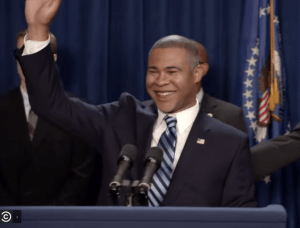
Today, President Barack Obama, for example, has become a model of linguistic flexibility and language awareness—even leading to a parody of his stylistic shifts by the comedians Key and Peele (an extremely language-aware duo) (https://www.youtube.com/watch?v=nopWOC4SRm4).

So, what distinguishes the awareness and flexibility of a contemporary language user like President Obama who wields a vast communicative repertoire and uses it strategically in different situations from those “lower middle class” people of the 1960’s whom Labov referred to as “linguistically insecure”? How do we explore this question as Citizen Sociolinguists?

I have a few tentative answers:

Most obviously, we can ask people about the language they use. Instead of drawing conclusions about insecurity or hypercorrectness, we can listen to what people say about their own language.

We can watch people. Take a look at a few linguistic self-portraits posted on the Internet. Countless people record themselves these days, illustrating (or instructing about) precisely the shifts in ways of speaking that Labov was examining in others. (See for example previous post on the Konglish Accent Tag).

Or, we can scratch the cultural surface and see how creative people like novelists, comedians, and screenwriters use different ways of speaking to build portraits of stupidity, snobbishness, insanity, or brilliance. Creative productions, including parodies like Key and Peele’s, illustrate flexible use of language that illustrates not linguistic insecurity, but language awareness. These portraits and parodies also have the potential to productively expand our awareness of social nuance and distinction.

How do you distinguish between Language Awareness and Linguistic Insecurity? What exemplifies this difference for you? Is it a useful distinction? Please comment below!

Modern Day Poetics: Internet Memes

Ain’t nobody got time for that.

Eyebrows on fleek

All your base are belong to us

I’ll get you my pretty…and your little dog too

One does not simply…walk into Mordor

Do you recognize any of these phrases? Do images come to mind when you hear them?

My guess is that most readers can identify these as common Internet memes:  Phrases that drop from seemingly nowhere and are suddenly said everywhere.  (If you don’t recognize them, google a few and you will soon discover a new world.)

Why do these exist?  You may be thinking now, “who knows?”  “who cares?” or perhaps even:

onedoesnotsimplyhavetime

I would like to humbly suggest that all these phrases build a common culture, a shared poetics, capable of spreading ideas, laughter, joy, idiocy, wisdom, and general being-together-ness, the same way adages (“A stitch in time saves nine”  “Early to bed…” “Haste makes waste”), poetry, folktales, or fables provide a medium for sharing ideas among a social group.

Why call it “Poetics”?   Isn’t this elevating the super-mundane to the arch and sublime?

Like poetry, memes lose their thrust when paraphrased or translated literally word for word. Memes get meaning not from individual words, but from the way words (and images, fonts, sound, music) are put together. As an astute student of mine pointed out, the expressive power of “Ain’t nobody got time for that” does not come through in a translation like, “Nobody has sufficient time to do that.”

And why does this matter?

Memes provide us a new way of thinking about how language works.  A way that is not homogenizing or reliant on a standardized set of rules or definitions.  To the contrary, memes often accumulate their meaning by combining ways of speaking that we don’t typically think of going together.  The arid diction of “One simply does not walk into Mordor” and the earthy “Aint nobody got time for that” combined give us joy!  The fantastical “I’ll get you my pretty” from Wizard of Oz lends an extra hint of evil when it is layered onto a more contemporary political rivalry:

I'llgetyoumyprettyevilbush

Now, take this view of memes and modern day poetics and think of everyday communication: Expressing ourselves can be more effective, creative, joyous and communicative when we combine words/languages/gestures and images so freely;  When “Aint nobody got time for that” can be used in the same sentence as “the quadradic equation”;  Or when phrases from Spanish, French, Tagalog, and English can rally one another in new, yet recognizable, combinations.So, memes, while functional as poetic chunks, also take on meaning in these creative combinations.  They provide the medium for continued snowballing of expression.

What role do Internet memes play in your life?  Do they facilitate communication?  Thinking? By analogy, do combinations of ways of speaking make communicating more facile? Do you know any multilingual memes? Add your comments, memes, examples here!

Language Awareness Part II: I didn’t do nothing! Ain’t nobody got time for that!

By far the most shock and awe was generated last week by responses to this Language Awareness Survey question (#4):

True or False:

In English, the sentence “I didn’t do nothing” means “I did do something.”

Nearly half (46 people out of 99) responded that this is “true.”

The comments (on Facebook and under the blog post) generally matched my own curious feelings:

 What’s with the answer to question 4???!?!?

and

#4’s divided answered really shocked me!!

Friends I saw face-to-face also expressed surprise of the same general nature: What in the world is going on with question 4?

My surprise continued when commentary specifically addressed the reasons for the vast quantity of “true” responses. Some people noted that this is a colloquial or vernacular or AAVE (African American Vernacular English) expression.

Interesting to see that the toughest question was about the colloquial “didn’t do nothing”.

and

“I didn’t do nothing.” Okay, we know what it means in the current vernacular.

and

If one reads this with an AAVE pronunciation, one would recognize the meaning of this construction in that variety of English as a negative construction.

And, even before I tabulated the results, one responder had commented:

 When you say “English” does it mean English language proper or does it mean our American English which is so flexible?

This suggests that if the question had inserted “Colloquially” or “In Flexible American English” rather than, “In English” people may have answered differently.

What if the question had been worded this way instead: Try it!

Commenters also mentioned a different issue: Someone could use this statement with a certain emphasis on the word nothing and that would yield the (non-colloquial) meaning, I did do something:

 I’ve definitely used the phrase “I didn’t do nothing; I finally figured X out!” when I came home from a writing session with nothing written, for example.

So, maybe this was just an inacurrate representation of a certain way of speaking English?

What if the question used a quote that was a more commonly recognized representation of the colloquialism/vernacular/ethnic variety that is being hinted at in the question? Consider, for example, if we re-asked #4 this way, keeping “In English,” but changing the quotation (take the poll!):

The elusive question #4 not only presents a stilted version of some mysterious “vernacular” but also insinuates that some pure, unitary form of “English” is relevant when making a meaningful judgment.

But, problems aside, the nearly 50/50 answer split opened a discussion and raised our awareness: What’s the difference between (to use the descriptions of one Facebook commenter) “Our Flexible American English” and “English Proper”? What kinds of “double negatives” do you use? What kinds are you aware of? What counts as a good/fun/interesting/smart/illuminating example of a double negative? Post your comments here!

Language Awareness: Who Has It?

An important premise of Citizen Sociolinguistics is that people have significant awareness of language and how they use it. People demonstrate this on the Internet by posting detailed definitions on Urban Dictionary (See previous post on UD.), making lengthy side-comments on YouTube about their own “accent” during Accent Challenge videos (See previous post on Konglish.), or just in conversation, talking about new words they’ve learned while traveling or meeting new people (See previous post on “Weg.”).

All this Internet and face-to-face banter about and with language, suggests to me that people have become increasingly liberal in their attitudes about language and more aware about how language can be used flexibly. But “seems” isn’t always “so.” Could it be that these super-aware language users are just a minute sliver of people representing the unique and tiny world I live in? Or, am I deluding myself about their “super-awareness”?

I decided to test the waters of language awareness by sending out a brief “Language Awareness Survey” to my Facebook friends. It consists of six T/F questions, extracted from an ancient revolutionary textbook called Language and Reality, written by Neil Postman in 1966. Here is my much-abridged version of his quiz:

Directions: Answer True (T) or False (F) for each of the statements which follow.

“T”= So far as I know, this statement is more true than false.

“F”= So far as I know, this statement is more false than true.

  1. ________ The English language has only six major vowel sounds: a, e, i, o, u, and y.
  2. ________ Correct grammar is grammar that is logical.
  3. ________ Generally, educated people do not use a dialect when speaking.
  4. ________ In English, the sentence, “I didn’t do nothing” means “I did do something.”
  5. ________ Regardless of how many people use the word “irregardless,” it is still not a word in English.
  6. ________ The more meanings a word has, the less useful it is.

Survey Monkey nicely tabulated the responses from the first 100 Facebook responders before asking for money (apologies to those friends who replied later whose responses I couldn’t use or even see!).

Given that Facebook responders are officially designated my “friends,” I assumed we would all have pretty much the same (“correct”) responses to these questions. My own humble responses would be False, False, False, False, False and, False!

A very smart Facebook responder must have had the same assumption (and shared my answers) because he commented,

“Advice on survey construction, don’t frame all or most questions so they have the same answer or same negation structure.”

Not only did I construct the survey poorly, but, as the results below illustrate, nobody paid much heed to this huge hint as to the “correct” answers when responding:

Question True False
1.     The English language has only six major vowel sounds: a, e, i, o, u, and y. 30 68
2.     Correct grammar is grammar that is logical. 19 79
3.     Generally, educated people do not use a dialect when speaking. 7 93
4.     In English, the sentence, “I didn’t do nothing” means “I did do something.” 46 53
5.     Regardless of how many people use the word “irregardless,”it is still not a word in English. 56 40
6.     The more meanings a word has, the less useful it is. 9 85


My first impression was shock and delight! My Facebook friends and I have more divergent views about language than I would have predicted. But I do have some possible (and potentially exciting) explanations, which I will delve into in my next post. In the meantime, send your comments. Do these results surprise you too? Why do you think the responses were so wide-ranging? If you would (or did) post answers other than F, F, F, F, F, F, why?

How Do People Use Language to Get Taken Seriously?

Is speaking-like-others-expect-you-to-speak the best way to get them to take you seriously?

In response to my last post (Freedom of Speech: What you Say and How you Say it) one thoughtful reader, I’ll call him Mr. MiddleOfTheRoad, took issue my rhetorical question: Why should we let others define the way we speak?

I had asserted that we shouldn’t let others define the way we speak, because when we do, we can’t express ourselves fully, and our unique perspectives may not be heard. The more we police how we say things, the more we circumscribe what gets said.

Mr. MiddleOfTheRoad asserted to the contrary, that

“…it’s in our own interest to learn how to speak as others do. We may WANT them to teach us.”

Two questions came up for me:

  1. Which “others” are you talking about? Teachers? Police? Parents? Bosses?
  2. Why wouldn’t they also want US to teach THEM? (Don’t Teachers, Police, Parents, Bosses learn new ways of speaking from Pupils, Citizens, Children, Employees?)

Mr. MiddleOfTheRoad continued…

If you wish to be taken seriously as, say, a lawyer then you had best learn how to speak as lawyers do, etc., etc.”

Yes, perhaps you must speak “as lawyers do” to be taken seriously as a lawyer. As another wise reader (I’ll call him City Kid) put it, a defense lawyer shouldn’t go before the judge and jury saying things like “Bobo here ain’t got no problems with the law.”

But aside from basic protocols for speaking in court or other professional settings, two problems immediately come to this mind:

  1. How do generic “lawyers” speak?(I suspect there are multiple nuanced versions Lawyer-Speak, just as there are multiple nuanced ways of speaking as a politician, a poet, or a preacher.)
  2. Is just speaking as some approximation of a generic lawyer really enough? (If you have something to say, something unique, that your addressees have not understood before, if you wish that unique perspective–your own–to be taken seriously, don’t you need to add something more than what “they” taught you? Might you not need to pull out some new expressive chops?)

There are more alternatives than speaking “like a lawyer” or “not like a lawyer.”

Yet, Mr. MiddleOfTheRoad went on to make a restaurant analogy:

“What would be the sociolinguistic equivalent of going into a restaurant and eating your meal with your fingers? That’s terrific if you want to offend people but if you don’t then you’ve got to learn and practice certain things.”

Again, the same two problems rankle:

  1. What is generic restaurant behavior? (Just as there are different ways of being a lawyer, politician, poet or preacher, there are many different ways of restaurant eating. Do you eat with your fingers at McDonalds? Lorenzo’s Pizza? Dunkin’ Donuts? Ben & Jerry’s? Might you grab an endive with your fingers at a Fancy French Restaurant if you had already asked the waiter for cutlery and wanted to make a point?)
  2. Is just knowing some generic approximation of restaurant behavior enough? Don’t we acquire new ways of eating when we go to new places? For example, I use spongy bread to eat my food when I’m in one of Philadelphia’s countless delicious Ethiopian restaurants. I use chopsticks when I’m in Chinatown, but, I may ask, diplomatically, for forks for my children.

How does this apply to using language to speak our minds, to command respect, to get people to take us seriously? Speaking on the bus, or as a lawyer, a mother, a politician, teacher or poet—speaking as an individual—takes awareness and finesse. As does eating with your fingers at a Fancy French Restaurant, asking for a fork in Chinatown, or learning to use spongy bread at an Ethiopian place.

Using language flexibly and to make points, but in ways that might be unfamiliar, that may require some extra reflection, or even require our addressees to ask questions, is not the same as being ignorant or uncivilized.

Not speaking exactly like others is not “the sociolinguistic equivalent of going into a restaurant and eating your meal with your fingers.” Not speaking exactly like others can be infinitely many other things, including being

  • poetic
  • creative
  • multilingual
  • flexible
  • intelligent.

Speaking differently can also be, even when a little off-putting, a way of getting people to take you and what you have to say, seriously.

Martin Luther King, Jr., whose birthday we are celebrating today, spoke in such a way that millions of people took him seriously, though he was also off-putting for many. He did not let others define either what he said or how he spoke. Yet, he was serious. And, he was taken seriously (in one sense, very sadly so).

How do you use language to get people to take you seriously? Are the only alternatives Offending or Not Offending? Proper or Not Proper? Correct or Incorrect? English or Not English? What other resources do you draw on? Post your responses here!


Freedom of Speech: What you say and How you say it

Freedom of speech has been in the news quite a bit lately. In the context of the recent Charlie Hebdo attack in France, such freedom relates primarily to the content of the message. Freedom to say what you want to say—about religious figures, politicians, the State, demographic groups…

But does this sentiment also apply to How people speak? Which language they are using? How they use that language? If they choose to say “ain’t” or “y’all,” or varieties like “Konglish” (see previous post on The Konglish Accent Tag)?

Figuring this out is an important task for the Citizen Sociolinguist. So, to explore, I sourced my Twitter friends:

 Is “Freedom of Speech” only about WHAT we say? or does it include HOW we say it?

A super-smart, zesty response came back from @nelsonlflores:

 @brymes Language policing should be reframed as an assault on freedom of speech!

What does this mean? What are examples of Language Policing as an assault on Freedom of Speech?

Here are some types of open, unconstrained, language policing mentioned by twitter friends or in stories told to me over the years:

Policing Language Code, as in, “English Only”:

  • Saying “Speak English!” to someone speaking another language when, for example, riding on public transportation.
  • Calling out to school-children speaking Spanish in the halls between classes: “Hey—English here!”


Policing Language Expertise, as in, “That isn’t even English”- or – “That is not Standard English”:

  • Describing “double-negatives” as “illogical” and thus “ignorant.” (Ain’t nobody got time for that!)
  • “Correcting” grammar in a way that impedes communication: Useful example provided from @joannaluz:

@nelsonlflores @brymes unlikely source: an ep of Masters of Sex depicts housewife correcting nanny–“ask” vs “aks”–as deeply violating — later the nanny deliberately uses “aks” in moment of defiance

Policing Language Boundaries, implying, “That is not Appropriate,” often done by authority figures:

  • Ignoring requests from someone younger until they follow with “sir” or “ma’am”
  • Ignoring what someone says, appearing not to understand, repeatedly saying “what?” when they sound “non-native” or simply different


These examples are about immediate acts of face-to-face language policing—hurtful to an individual, but momentary. However, the consequences of these acts of language policing, gradually, may significantly chip away at Freedom of Speech.

What? How? How do perhaps repeated slaps on our communicative freedoms like “speak English!”, “That’s not proper!”, or even simply passively waiting for an address term like “sir” or “ma’am” affect more substantive issues of Freedom of Speech?

This is how: The more we police how we say things, the more we circumscribe what gets said.

When we are worried about how someone is mixing English and Korean and Spanish, or sounding “ignorant” or “uneducated” or “disrespectful” in their diction, we might be missing out on what these people—who speak in a different way—have to say. I suspect we may also be missing out on an unfamiliar point of view.

The how and the what of Freedom of Speech are inseparable.

What do you think counts as Freedom of Speech? Is this freedom only about content? Is it also about how we say things? Have you experienced Language Policing that threatened your own freedom of speech? Leave your comments here!

Is that a Word? Urban Dictionary as a Site for Citizen Sociolinguistics

Thank you to RCCola for posting a comment about Urban Dictionary! (See previous entry, How Citizen Sociolinguists Work: Pow!). UrbanDictionary.com can be a crucial first stop for a Citizen Sociolinguist. Despite being filled with smarmy filth, Urban Dictionary helps the sociolinguistically curious access crucial meanings behind many words—even seemingly mature words.

Urban Dictionary also gives us a new way of thinking about what words mean—and even what counts as a word. As mentioned previously on this site, people often judge their own language by what some imagined, composite Authority on Language might say about it. We may hear that internalized voice of the Standardization Big Brother asking: Is that even a word!?

From a Citizen Sociolinguistics perspective, the best way to find out about word meaning is not to ask, “Is that a word?” (which might pointlessly lead one to a traditional dictionary) but to figure out how people use the item in question and what impression it makes. Here’s where Urban Dictionary can be a handy first stop. Let’s think this through by puzzling over arguably one of the most annoying words in the English language: Irregardless.

Now, the first (most popular) entry on Urban Dictionary says irregardless is…

Used by people who ignorantly mean to say regardless. According to webster, it is a word, but since the prefix “ir” and the suffx “less” both mean “not or with” they cancel each other out, so what you end up with is regard. When you use this to try to say you don’t care about something, you end up saying that you do. Of course everyone knows what you mean to say and only a pompous,rude asshole will correct you.

Despite gratuitous profanity typical of Urban Dictionary, this entry seems to capture a crucial social meaning of “irregardless”—its association with being pompous in an ignorant way. So, Urban Dictionary provides a useful first step toward understanding a word-like item’s social value. A second step might be to see how this aligns with our own and others’ experience. Regarding irregardless, this Urban Dictionary entry aligns nicely with a more G-rated version of the same sentiment, voiced by Bert, a 16-year-old high school student:

 I feel like people say “irregardless” to sound like they know what they are talking about. Go on Facebook arguments and you’ll see it: “ Irregardless” [said with funny pompous voice]. People use it to try to sound smart. “Irregardless” [pompous voice again]. They are trying to sound smart.

For most humans, whether some spoken item officially counts as a word is only the tip of the conversational iceberg. As these comments illustrate, a host of other questions seem more critical:

  • What type of impression am I trying to make when I use this word?
  • Do my conversation partners know about it?
  • Do they have some awareness of how I am using this word?
  • Do I have any awareness of how I am using this word?

While Urban Dictionary may provide wide-ranging answers of variable quality, it makes a good a first stop on the Citizen Sociolinguistic exploration of a word’s social value.

What are your criteria for a word? Does its existence on Urban Dictionary make it so? How do you use Urban Dictionary? Post your comments here!