Do you change the way you speak depending on the situation and the person you are addressing?
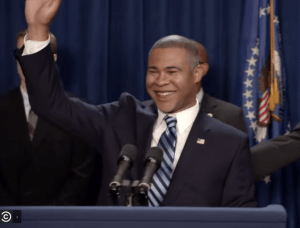
May I venture… Of course you do!
Does this mean you are linguistically insecure? Or does it mean that you are a sensitive speaker with finely tuned language awareness? Let’s consider the difference.
The ominous phrase Linguistic Insecurity probably makes intuitive sense to most people. But it is also a technical term defined in the ‘60s by William Labov as “hypersensitivity to stigmatized features which [speakers] themselves use.” For example, a linguistically insecure New Yorker who casually says they love that delicious, cocoa-bean-derived treat, “chaaaaahklit” would, in formal circumstances, pronounce this very carefully as “chocolate.”
Labov’s research indicated that, specifically (1966, p. 93):
Lower middle class speakers show the greatest Linguistic Insecurity.
That is, in his study of people in New York City in the 1960’s, these “lower middle class” people were the most likely to alter the way they spoke (away from casual speech) when reading passages or word lists to a linguist. People of “low” and “lower class” did not show this kind of stylistic range.
Nor did “upper middle class” people. In fact, “lower middle class” people became even more “hypercorrect” (Labov’s term) than upper middle class people when speaking in very controlled formal reading situations.
Now one might chortle knowingly at the concept of Linguistic Insecurity, feeling confident that one uses language properly (though not hypercorrectly) and does not partake in such callow language performances. But: Labov made another point about this group of “lower middle class” people who exhibited linguistic insecurity. They also had the widest stylistic range of any other group. That is, they had a way of speaking very casually and a way of speaking mildly casually, a way of speaking somewhat formally, and a way of speaking very controlled English that were all distinct from one another. And they used these ways of speaking in distinct situations.
This ability to call on such a wide repertoire could be a crucial tool for someone who wants to (who needs to!) strategically, intelligently and creatively use language. Shifting one’s language from situation to situation according to perceived social value of different ways of speaking could suggest “linguist insecurity” but it might also suggest an impressive level of Language Awareness.
Today, President Barack Obama, for example, has become a model of linguistic flexibility and language awareness—even leading to a parody of his stylistic shifts by the comedians Key and Peele (an extremely language-aware duo) (https://www.youtube.com/watch?v=nopWOC4SRm4).
So, what distinguishes the awareness and flexibility of a contemporary language user like President Obama who wields a vast communicative repertoire and uses it strategically in different situations from those “lower middle class” people of the 1960’s whom Labov referred to as “linguistically insecure”? How do we explore this question as Citizen Sociolinguists?
I have a few tentative answers:
Most obviously, we can ask people about the language they use. Instead of drawing conclusions about insecurity or hypercorrectness, we can listen to what people say about their own language.
We can watch people. Take a look at a few linguistic self-portraits posted on the Internet. Countless people record themselves these days, illustrating (or instructing about) precisely the shifts in ways of speaking that Labov was examining in others. (See for example previous post on the Konglish Accent Tag).
Or, we can scratch the cultural surface and see how creative people like novelists, comedians, and screenwriters use different ways of speaking to build portraits of stupidity, snobbishness, insanity, or brilliance. Creative productions, including parodies like Key and Peele’s, illustrate flexible use of language that illustrates not linguistic insecurity, but language awareness. These portraits and parodies also have the potential to productively expand our awareness of social nuance and distinction.
How do you distinguish between Language Awareness and Linguistic Insecurity? What exemplifies this difference for you? Is it a useful distinction? Please comment below!
 Citizen Sociolinguistics